
How Does AI Recruiting Work?
The recruitment process has always involved a mix of judgment, coordination, and repetitive manual work. Recruiters need to review large numbers of applications, identify qualified candidates, communicate quickly, and keep hiring teams aligned across multiple stages. As hiring volumes grow, that process becomes harder to manage efficiently.
That is why more companies are exploring AI in recruitment process workflows. Rather than replacing recruiters, AI helps teams handle repetitive tasks, organize candidate information, and move hiring forward with more structure and consistency.
For companies evaluating new hiring technology, one question usually comes first: how does AI recruiting work? The answer is simpler than it may seem. AI works by analyzing recruitment data, identifying patterns, supporting screening and shortlisting, and automating selected workflow steps so recruiters can spend more time on evaluation and decision-making.
In this guide, we will break down how AI fits into hiring, where it adds value, and what teams should keep in mind when adopting it.
What AI Means in the Recruitment Process
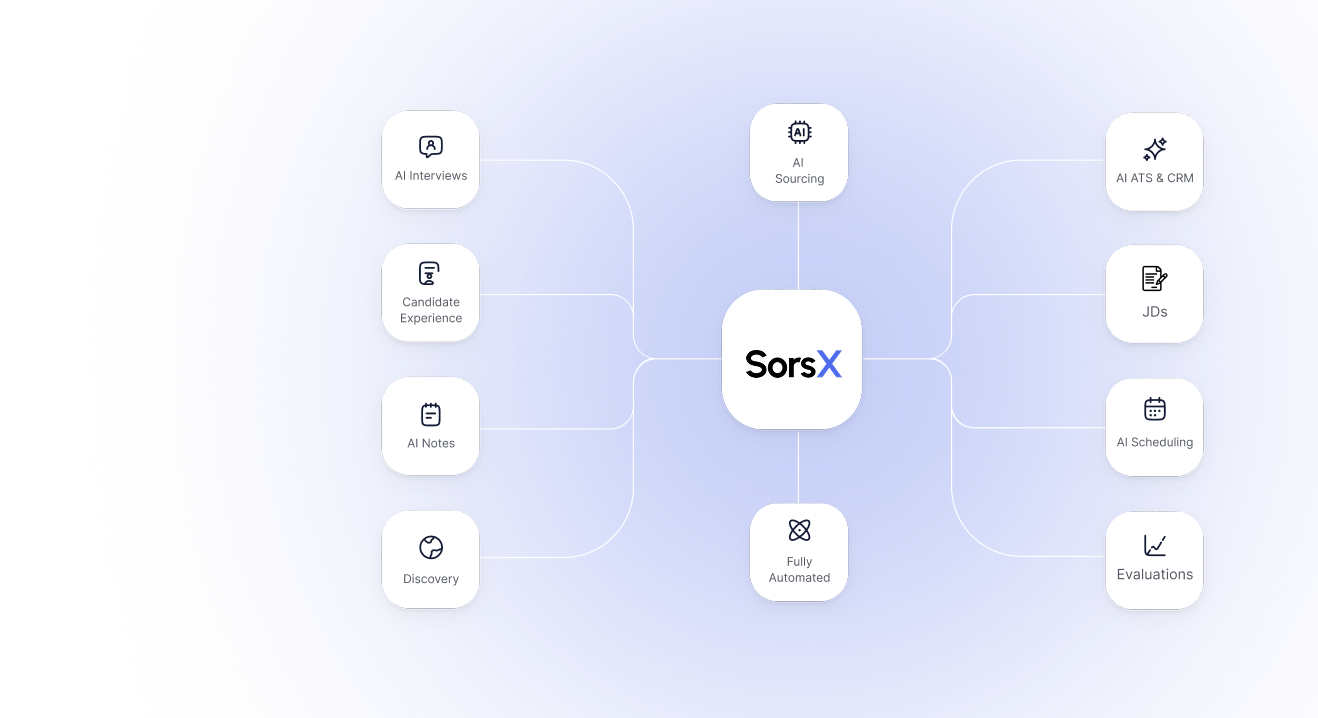
At a practical level, AI in recruiting process workflows refers to the use of artificial intelligence to support tasks such as resume screening, candidate matching, shortlisting, communication, scheduling, and reporting.
Instead of relying only on manual review, recruiters can use AI-powered systems to process large amounts of application data more efficiently. These systems can compare resumes to job requirements, surface likely matches, and help teams organize candidates based on defined criteria.
This is why AI for recruitment process improvement is gaining attention. It gives hiring teams a way to reduce administrative workload while making hiring operations more structured.
It is important, however, to set the right expectation. AI is not meant to fully automate hiring decisions. It is most effective when it supports recruiters by improving speed, visibility, and consistency across the funnel.
Why More Teams Are Using AI in Recruiting Process Workflows
Traditional recruiting often slows down because of repeated manual steps. Recruiters spend hours reviewing resumes, moving candidates between stages, scheduling interviews, sending follow-ups, and updating internal stakeholders. Even strong teams can lose momentum when open roles increase.
That is where AI and recruitment process optimization becomes useful. AI can reduce time spent on repetitive work and help teams focus on the parts of hiring that need human judgment.
Companies are also under pressure to improve candidate experience. Delayed responses, inconsistent evaluation, and unclear processes can damage employer brand and lead to candidate drop-off. By helping teams work faster and more systematically, AI can improve both internal efficiency and the external hiring experience.
The growing interest in AI in HR recruitment processes benefits is largely driven by this need for speed, structure, and scalability.
How Does AI Recruiting Work Step by Step?
The easiest way to understand AI in recruitment process design is to look at the main stages where AI is typically applied.
1. Job requirement analysis
Some platforms start by helping teams interpret job requirements more clearly. They analyze role descriptions, qualifications, and hiring criteria to create a structured basis for screening and matching.
This matters because better hiring starts with clearer inputs. If the role criteria are vague or inconsistent, even advanced tools will struggle to support the process well.
2. Candidate sourcing and profile discovery
AI can also support candidate sourcing by identifying profiles that match role needs across databases or talent pools. For hiring teams managing multiple roles, this can speed up the discovery of potentially relevant candidates.
In this stage, AI help with recruiting process workflows by reducing the amount of manual searching recruiters need to do.
3. Resume screening and matching
This is one of the most common uses of AI in hiring. The system reviews candidate resumes and compares them with the role requirements defined by the employer. It may identify skills, experience levels, qualifications, and other fit signals that help recruiters prioritize which profiles to review first.
Used correctly, this does not eliminate recruiter review. It simply makes the first pass more efficient.
4. Candidate ranking and shortlisting
Once applications are screened, AI can help sort candidates into groups based on relevance or matching criteria. This is often where teams start seeing real operational value.
Instead of reviewing every applicant in the same order, recruiters can focus on candidates who appear most aligned with the role. That improves speed while making the shortlisting process more manageable.
5. Interview coordination and workflow automation
Another key benefit of AI for recruitment process efficiency is workflow automation. AI-enabled systems can support interview scheduling, reminders, candidate status updates, and movement between recruitment stages.
This reduces coordination bottlenecks and helps the hiring process feel smoother for both candidates and internal teams.
6. Reporting and process optimization
AI can also support analytics by showing where the recruitment funnel is slowing down, where candidates drop off, and which stages require improvement. This is a major part of the long-term AI impact on recruitment process performance.
Recruiting teams do not just need speed. They also need visibility into how the process is working and where changes will create better outcomes.
The AI Impact on Recruitment Process Performance
The AI impact on recruitment process performance is usually seen in a few core areas.
The first is speed. Screening, sorting, scheduling, and communication can all move faster when repetitive tasks are automated.
The second is consistency. Structured systems help teams apply the same process across larger candidate pools, which is difficult to maintain with fully manual workflows.
The third is productivity. Recruiters can spend less time on admin-heavy tasks and more time on candidate conversations, stakeholder alignment, and hiring decisions.
The fourth is visibility. AI-supported reporting can help leaders understand what is happening across open roles and where the process needs adjustment.
These are some of the clearest reasons companies continue investing in AI in recruitment process solutions.
Where AI Helps With Recruiting Process Efficiency
When people ask how AI help with recruiting process improvement, the answer usually comes down to operational support.
AI is especially useful when teams need to:
- manage high application volume
- accelerate early-stage screening
- organize shortlisting more efficiently
- automate scheduling and follow-up steps
- improve collaboration across hiring teams
- gain better visibility into recruitment performance
For some businesses, the value is time savings. For others, it is better process control. In many cases, it is both.
What AI Should Not Replace in Hiring
Even though AI and recruitment process technology is improving quickly, there are still core responsibilities that should remain human-led.
AI should not replace:
- final hiring decisions
- structured interviews and human evaluation
- judgment around context and team needs
- fairness reviews and process oversight
- communication that requires empathy or nuance
A strong hiring process uses AI to support decision-making, not to remove accountability from recruiters and hiring managers. This balance is essential for responsible adoption.
Best Practices for Integrating AI in Recruitment Processes
Teams looking at the best practices for integrating AI in recruitment processes should start with process design, not software features.
First, define where the current workflow is slowing down. Is the problem screening volume, coordination, inconsistent evaluation, or lack of reporting?
Second, set clear criteria for how AI will support the team. It should improve efficiency without weakening recruiter control.
Third, keep human review in place at critical stages. Screening support is useful, but decisions about candidate progression should still involve structured oversight.
Fourth, make sure the hiring team understands how the system fits into daily workflows. Even the best platform creates little value if adoption is weak.
Finally, measure outcomes. Review whether the process is becoming faster, more consistent, and easier to manage over time.
How AI-Driven Platforms Are Transforming Recruitment Processes
The growth of AI-driven platforms transforming recruitment processes is part of a larger shift in how companies approach hiring operations.
Recruitment used to rely heavily on manual coordination across separate tools, inboxes, spreadsheets, and disconnected evaluation steps. Today, AI-enabled platforms are helping teams centralize those workflows, structure candidate movement, and automate selected parts of the funnel.
This does not mean recruiting becomes entirely automated. It means the process becomes more systematic. Teams gain a better way to manage volume, improve responsiveness, and make hiring operations more scalable.
For businesses that are hiring frequently or growing quickly, that operational shift can make a major difference.
Final Thoughts
So, how does AI recruiting work?
At its core, AI supports the recruitment process by analyzing candidate and job data, improving screening and shortlisting, automating selected tasks, and giving hiring teams better visibility into what is happening across the funnel.
The biggest value of AI in recruitment process design is not just speed. It is the ability to create a more structured, consistent, and manageable hiring workflow. When implemented thoughtfully, AI can help recruiters focus less on repetitive admin and more on high-quality hiring decisions.
For teams exploring the next step in hiring operations, the right approach is not to ask whether AI should replace recruiters. The better question is where AI can make the recruitment process more effective while keeping human judgment at the center.
If you want to see how this works in practice, explore how SorsX helps teams structure screening, shortlisting, and hiring workflows with AI-powered recruitment automation.