
AI Recruitment vs Traditional Hiring: Which Approach Works Better?
Recruiting has always been a people-driven function. Hiring teams review applications, coordinate interviews, assess candidate fit, and make final decisions based on experience, judgment, and business needs. For years, most of this work followed a traditional recruiting process built around manual effort and recruiter coordination.
Today, that model is changing. More companies are adding AI recruiting tools to the hiring workflow to improve speed, reduce repetitive tasks, and create more structure across sourcing, screening, and shortlisting. As a result, many teams are now asking the same question: in AI recruiting vs traditional hiring, which approach actually works better?
The real answer is not as simple as choosing one over the other. AI recruiting tools can improve efficiency and help teams scale. Traditional hiring methods still matter when judgment, context, and candidate interaction are critical. The most effective hiring strategies often combine both.
This guide breaks down the key differences between AI-supported recruiting and the manual recruitment process, explains where each model performs best, and shows how teams can make smarter decisions when evaluating hiring workflows.
What Is the Difference Between AI Recruitment and Traditional Hiring?
The simplest way to understand AI recruiting vs traditional hiring is to look at how work gets done.
In a traditional model, recruiters handle most tasks manually. They review resumes one by one, search for candidates across platforms, schedule interviews through back-and-forth communication, and manage hiring stages across separate tools or spreadsheets. This approach relies heavily on recruiter time and process discipline.
By contrast, AI recruiting tools use artificial intelligence to support hiring tasks such as screening, sourcing, shortlisting, workflow automation, and reporting. Instead of asking recruiters to process every step manually, AI helps teams organize information faster and prioritize the work that needs closer attention.

This does not mean AI replaces recruiters. It means AI tools for recruiting reduce the manual burden in the most repetitive and operationally heavy parts of the hiring process.
How the Traditional Recruiting Process Works
The traditional recruiting process is familiar to most hiring teams. It often begins with posting a job, collecting applications, and reviewing resumes manually. Recruiters then identify promising candidates, reach out, coordinate interviews, gather feedback, and move applicants through hiring stages until a final decision is made.
Resume review and manual screening
In a manual recruitment process, early-stage screening often takes significant time. Recruiters sort through resumes, compare qualifications with job criteria, and decide which applicants should move forward. When application volume is high, this can create delays and increase the risk of overlooking strong candidates.
Interview coordination and communication
Traditional workflows also require a lot of coordination. Recruiters manage calendars, send interview invitations, follow up with candidates, and communicate updates internally. These steps are necessary, but they can consume a large share of recruiter time.
Decision-making across hiring stages
One strength of traditional hiring methods is that they keep human evaluation at the center of the process. Recruiters and hiring managers can apply context, judgment, and discussion at each stage. That is especially valuable for nuanced roles, leadership hiring, or situations where personal interaction matters early.
The challenge is that manual workflows can become difficult to maintain as hiring demand increases. More roles and more applicants usually mean more bottlenecks.
How AI Recruiting Tools Change the Hiring Process
AI recruiting tools are designed to improve how hiring teams manage volume, structure, and operational complexity. They do not replace the purpose of recruiting. They improve how the process is carried out.
Faster screening and shortlisting
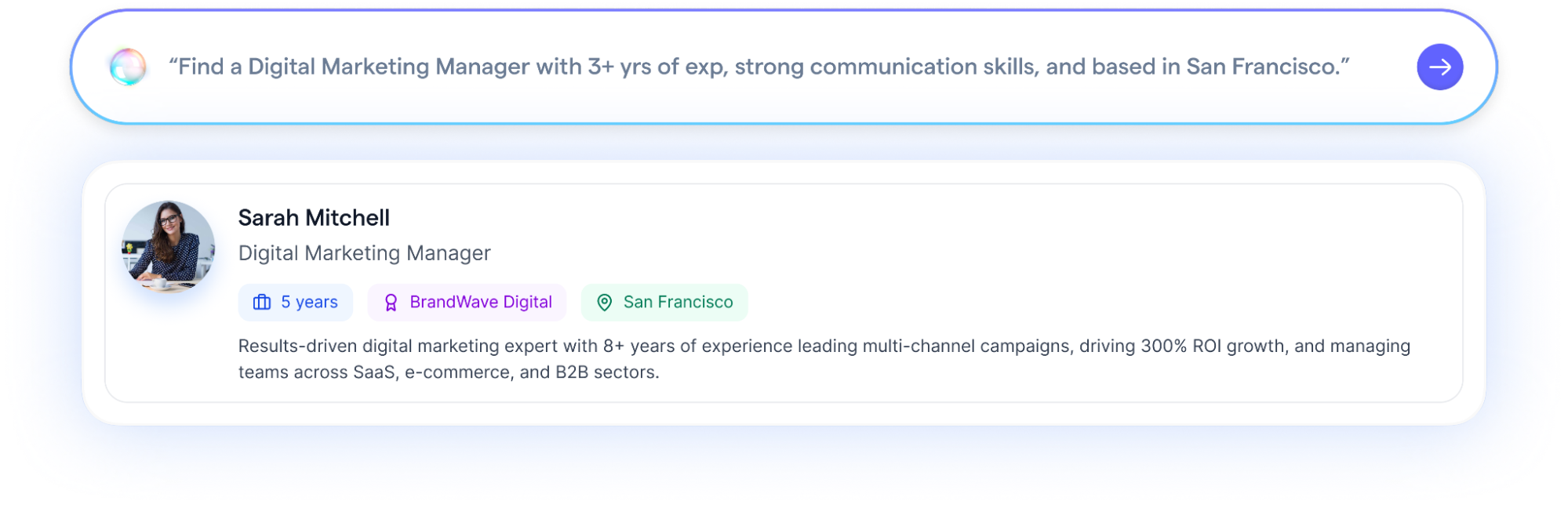
One of the biggest advantages of AI recruitment tools is speed. Instead of reviewing every application manually in the same order, AI-supported systems can analyze resumes against role requirements and surface candidates who appear most relevant.
This allows recruiters to focus on high-priority profiles first. It is one of the clearest differences in AI vs manual hiring.
Better sourcing support
Many AI tools for recruiters also support sourcing. They help teams identify candidate profiles across databases or talent pools, making it easier to find relevant applicants without relying entirely on manual search.
This is why interest in AI sourcing tools for recruiting has grown, especially among teams hiring at scale or across multiple roles.
Workflow automation
Another strength of AI powered recruiting tools is automation. These systems can support scheduling, status updates, stage movement, reminders, and workflow tracking. That reduces administrative work and helps the hiring process move with fewer delays.
Hiring analytics and reporting
Traditional workflows often provide limited visibility unless teams build manual reporting systems around them. By contrast, many AI based recruitment tools include dashboards and insights that show funnel performance, bottlenecks, and process trends.
That level of reporting can help teams improve hiring operations over time instead of reacting to problems role by role.
AI vs Manual Hiring: The Biggest Differences
When comparing AI vs manual hiring, the main differences usually show up in five areas.
Speed
The manual recruitment process is slower because each step depends more heavily on recruiter action. AI recruiting tools speed up sourcing, screening, and coordination.
Consistency
Manual workflows can vary depending on recruiter workload and process discipline. AI tools for recruitment help standardize parts of the process, creating more consistent handling across larger candidate pools.
Scalability
Traditional methods work best when hiring demand is relatively manageable. As volume grows, manual processes become harder to sustain. Recruiting AI tools are better suited to environments where teams need to handle more applications without increasing manual work at the same rate.
Recruiter workload
In traditional hiring, recruiters spend a large amount of time on repetitive tasks. AI tools for recruiters reduce that burden, allowing more time for stakeholder alignment, interviews, and decision support.
Candidate experience
Slow screening and scheduling can hurt candidate experience. AI-supported workflows can help teams respond faster and keep the process more organized, which often leads to a better experience for applicants.
Where Traditional Hiring Methods Still Matter
Even with the growth of AI powered recruitment tools, traditional recruiting still matters in important ways.
Recruiting is not only about processing data. It also involves assessing communication, understanding context, building trust, and managing complex decisions. Human recruiters remain essential for:
- structured interviews
- relationship-building with candidates
- context-based evaluation
- fairness oversight
- collaboration with hiring managers
- final hiring decisions
This is why the strongest answer to AI recruiting vs traditional hiring is rarely total replacement. AI can support operational efficiency, but human judgment should still lead the most important decisions.
Benefits of AI Recruiting Tools
For many companies, the value of AI recruiting tools comes from making the process more manageable and more scalable.
Key benefits include:
- faster early-stage screening
- improved sourcing efficiency
- more structured shortlisting
- reduced administrative workload
- better hiring visibility
- stronger workflow consistency
These benefits are especially important for teams dealing with high application volume, lean recruiting resources, or growth-related hiring pressure.
That is also why so many buyers are searching for the best AI recruiting tools. They are not looking for software that replaces recruiters. They are looking for software that helps recruiters perform at a higher level.
What to Look for in the Best AI Recruiting Tools
Not all platforms deliver the same value. When evaluating the best AI recruiting tools, teams should focus on workflow fit rather than feature volume alone.
Useful questions include:
- Does the platform support sourcing, screening, and shortlisting in practical ways?
- Does it improve recruiter efficiency without removing control?
- Is it easy for hiring managers and recruiters to adopt?
- Does it provide meaningful analytics, not just automation?
- Can it support candidate experience as well as internal operations?
The strongest AI powered recruiting tools are usually the ones that solve specific hiring problems clearly and fit naturally into the day-to-day recruitment process.
AI Recruiting vs Traditional Hiring: Which Model Is Best?
In most cases, the best model is not fully manual and not fully automated.
The traditional recruiting process remains valuable for interviews, nuanced evaluation, and final decisions. AI recruiting tools are most valuable in sourcing, screening, shortlisting, scheduling, and reporting.
That means the most effective hiring model is often a hybrid one.
AI can support:
- candidate sourcing
- resume screening
- shortlisting
- scheduling
- workflow tracking
- reporting
Human recruiters should continue leading:
- interviews
- candidate conversations
- contextual evaluation
- fairness review
- final decisions
This balance gives teams the efficiency of AI while preserving the judgment and accountability that strong hiring requires.
Final Thoughts
The comparison between AI recruitment vs traditional hiring is not really about technology replacing people. It is about understanding where each approach creates the most value.
Traditional hiring methods offer nuance, relationship-building, and human judgment. AI recruiting tools offer speed, structure, scalability, and operational efficiency. When businesses compare AI vs manual hiring, the best answer is usually a combination of both.
For modern hiring teams, the goal should not be to automate recruiting completely. The goal should be to reduce repetitive work, improve process quality, and make better hiring decisions with the right balance of technology and human input.
If your team is comparing modern hiring workflows with traditional recruiting, explore how SorsX helps companies build a more structured process with AI-powered sourcing, screening, and shortlisting support.